
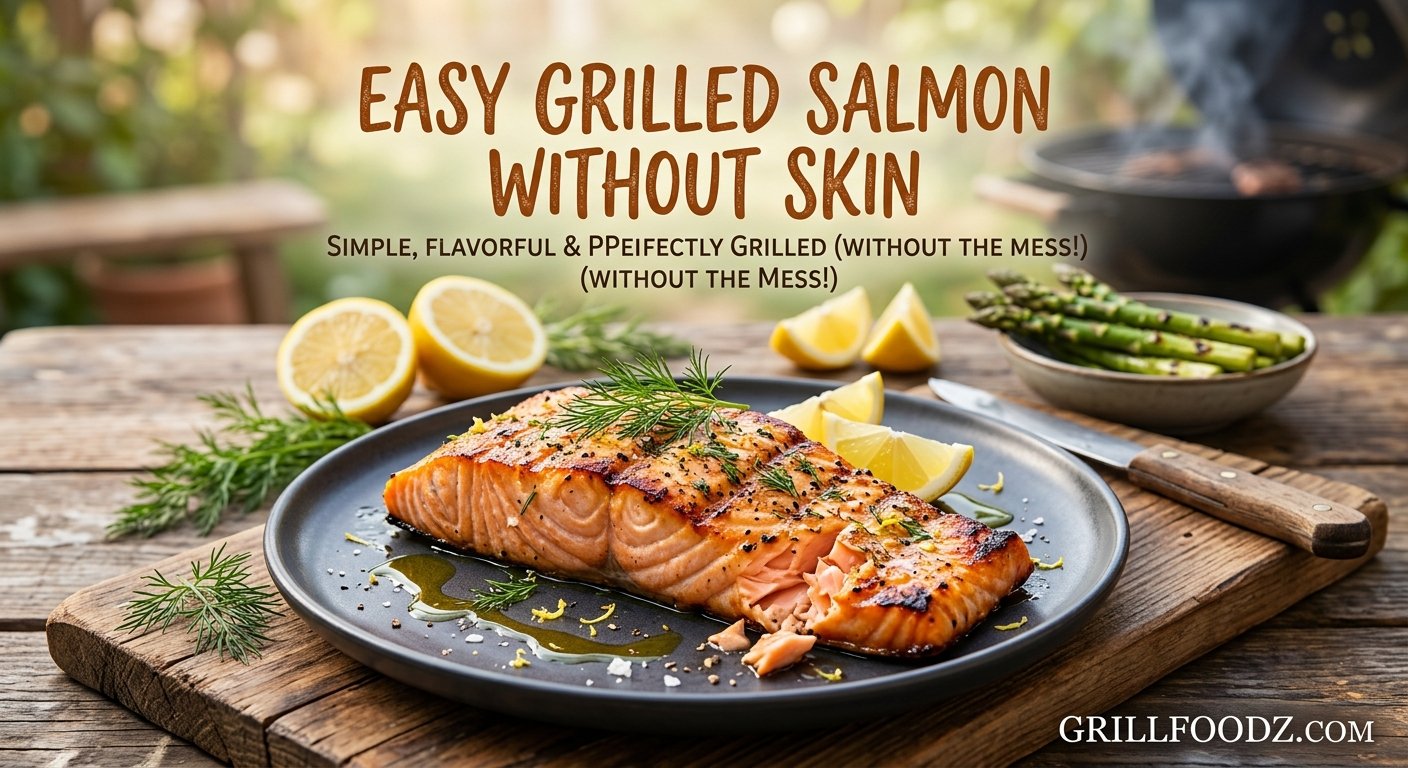
Easy Grilled Salmon Without Skin: A Simple, Juicy, and Flavorful Recipe
Grilled salmon is one of those meals that feels special without requiring hours in the kitchen. It is flavorful, tender, and easy to pair with vegetables, rice, potatoes, or a fresh salad. If you prefer boneless, skinless fish or simply want a lighter meal, this easy grilled salmon without skin recipe is an excellent choice.
Cooking salmon without its skin may seem challenging at first because the fish can stick to the grill or become dry if it is overcooked. Fortunately, a few simple techniques can help you prepare salmon that stays moist inside, develops a lightly golden exterior, and tastes delicious in every bite.
This recipe uses everyday ingredients, including olive oil, garlic, lemon juice, paprika, salt, and black pepper. You do not need an elaborate marinade, expensive seasonings, or professional cooking equipment. With a properly preheated grill and a little attention to cooking time, you can make delicious grilled salmon at home.
Whether you are preparing a quick weeknight dinner, cooking for your family, or planning a healthy weekend meal, this simple method makes grilled salmon without skin easy to prepare.
Why You Will Love This Easy Grilled Salmon Without Skin Recipe
There are plenty of reasons to make this recipe part of your regular meal rotation.
Simple ingredients: You probably already have several of the ingredients in your kitchen. Olive oil, garlic, lemon, and basic seasonings provide plenty of flavor without complicated preparation.
Quick preparation: The fish takes only a few minutes to prepare, making this recipe suitable for busy evenings.
No salmon skin required: You can use skinless salmon fillets purchased from your grocery store or carefully remove the skin from regular salmon fillets before cooking.
Tender and flavorful: A simple oil-based seasoning mixture helps coat the fish, while careful grilling prevents it from becoming unnecessarily dry.
Easy to customize: You can change the seasonings, add fresh herbs, or use a little chili powder for a spicy variation.
Versatile serving options: Grilled salmon tastes wonderful with roasted vegetables, steamed rice, mashed potatoes, or a crisp green salad.
This recipe is also easy to scale. Prepare one fillet for a quick personal meal or several fillets when serving guests.
Ingredients for Easy Grilled Salmon Without Skin
You only need a handful of ingredients to make this simple grilled salmon recipe.
Main Ingredients
- 4 skinless salmon fillets, approximately 5–6 ounces each
- 2 tablespoons olive oil
- 2 cloves garlic, finely minced
- 1 tablespoon fresh lemon juice
- 1 teaspoon paprika
- 1/2 teaspoon salt, or to taste
- 1/4 teaspoon freshly ground black pepper
- 1/2 teaspoon dried parsley or Italian seasoning
- Lemon wedges, for serving
- Fresh parsley, optional, for garnish
Choose salmon fillets that are relatively even in thickness. This helps them cook more consistently on the grill.
Fresh or properly thawed frozen salmon can both work well. If using frozen fish, thaw it in the refrigerator before cooking and pat it dry with paper towels.
Ingredient Substitutions
You do not have to follow the ingredient list exactly. This recipe is flexible enough to accommodate different tastes and pantry supplies.
Olive oil: Avocado oil or another suitable high-heat cooking oil can be used instead.
Fresh garlic: Use approximately 1/2 teaspoon garlic powder if fresh garlic is unavailable.
Lemon juice: Fresh lime juice provides a slightly different but equally refreshing citrus flavor.
Paprika: Smoked paprika adds a deeper, smoky taste, while sweet paprika keeps the flavor mild.
Italian seasoning: Dried oregano, thyme, or parsley can be used individually.
Black pepper: White pepper or a small pinch of cayenne pepper can provide a different flavor profile.
If your salmon fillets are already seasoned or salted, adjust the additional salt accordingly.
How to Choose Salmon for Grilling Without Skin
Choosing the right fish is one of the easiest ways to improve your results.
Look for salmon fillets that have a fresh appearance and a mild smell. The flesh should look moist and firm rather than mushy or discolored. If purchasing frozen salmon, choose a product that has remained properly frozen and shows no signs of damaged packaging.
Skinless salmon fillets are convenient because they eliminate the need to remove the skin yourself. However, regular salmon fillets can also be used if you carefully remove the skin with a sharp knife.
For grilling, medium-thick fillets are generally easier to handle than very thin pieces. Thin fillets cook quickly and may break apart when flipped.
If your fillets vary significantly in thickness, place thicker pieces over the hotter part of the grill and move thinner pieces to a cooler area as they finish cooking.
Most importantly, keep the fish cold until you are ready to prepare it, and avoid leaving raw salmon at room temperature for extended periods.
How to Make Easy Grilled Salmon Without Skin
Follow these simple steps for flavorful salmon that is tender inside and lightly browned outside.
Step 1: Prepare the Salmon
Remove the salmon fillets from their packaging and place them on a clean plate or cutting board.
Pat each fillet dry with paper towels. Removing excess surface moisture helps the fish brown more effectively and reduces the chance of it steaming instead of grilling.
Check the fillets for any remaining pin bones and remove them with clean tweezers if necessary.
If you are starting with salmon that still has skin, carefully slide a sharp knife between the skin and flesh, keeping the blade angled slightly toward the skin. Remove the skin before seasoning.
Try to keep the fillets intact because skinless salmon is more delicate during cooking.
Step 2: Make the Seasoning Mixture
In a small bowl, combine the olive oil, minced garlic, lemon juice, paprika, salt, black pepper, and dried parsley.
Stir until the ingredients are evenly mixed.
The olive oil helps distribute the seasonings across the fish, while garlic and paprika provide savory flavor. Lemon juice adds brightness that balances the natural richness of salmon.
If you prefer a stronger garlic flavor, add a little extra garlic. For a spicy version, include a small pinch of cayenne pepper or chili powder.
Step 3: Season the Fish
Place the salmon fillets on a plate or in a shallow dish.
Brush the seasoning mixture over all sides of each fillet. Use a gentle touch to avoid breaking the fish.
Allow the salmon to rest in the refrigerator for approximately 10–15 minutes if you have time. This gives the seasonings an opportunity to coat the fish evenly.
A long marinade is unnecessary for this recipe. Because the mixture contains lemon juice, avoid leaving the fish in it for an extended period, as the acidic ingredients can affect the texture of the surface.
Step 4: Preheat the Grill
Preheat your outdoor gas or charcoal grill to medium-high heat, approximately 400–450°F.
A properly heated grill is especially important when cooking salmon without skin. The fish has no protective skin layer, so it can stick more easily if the cooking surface is inadequately prepared.
Clean the grill grates thoroughly before cooking. Once the grill is hot, lightly oil the grates using a suitable method designed for grill use.
Avoid pouring oil directly onto an open flame. You can also use a well-oiled grill basket or a suitable grill-safe fish tray to make handling delicate fillets easier.
If you are using a grill pan indoors, preheat it over medium to medium-high heat according to the manufacturer’s instructions.
Step 5: Place the Salmon on the Grill
Carefully place each salmon fillet on the hot, clean cooking surface.
Leave a little space between the pieces so heat can circulate properly.
Once the fish is on the grill, avoid moving it immediately. Allow the first side to cook long enough to develop a lightly browned surface.
Depending on the thickness of the fillets and the heat of your grill, this may take approximately 3–5 minutes.
If the salmon resists when you try to lift it with a thin, wide spatula, give it a little more time. Forcing it off the grill can cause the flesh to tear.
Step 6: Flip the Salmon Carefully
Use a wide fish spatula to support the fillet from underneath. If necessary, use a second utensil to steady the top while turning it.
Flip the salmon gently and cook the other side for another 3–5 minutes, adjusting the time for thickness and grill temperature.
Avoid repeatedly turning the fish because skinless fillets can break apart more easily than skin-on salmon.
Very thick fillets may need additional cooking time. Thinner pieces may finish sooner, so check them individually rather than assuming every fillet will cook at the same rate.
Step 7: Check for Doneness
The safest way to check salmon is with an instant-read food thermometer inserted into the thickest part of the fillet.
For food safety, the USDA recommends cooking fish to an internal temperature of 145°F.
The flesh should appear opaque and separate easily into flakes when tested with a fork. However, appearance alone is not a reliable substitute for checking temperature.
Remove the salmon from the grill once it reaches the recommended temperature.
Step 8: Rest and Serve
Transfer the grilled salmon to a clean plate and let it rest briefly before serving.
Add fresh lemon juice, chopped parsley, or a little extra black pepper if desired.
Serve immediately with your favorite side dishes for a simple and satisfying meal.
How Long Does Skinless Salmon Take to Grill?
Cooking time depends on the thickness of the fillets, the grill temperature, and whether the fish begins cold or partially frozen.
The following estimates assume that the grill is preheated to medium-high heat and the salmon is fully thawed.
| Salmon thickness | Approximate cooking time |
|---|---|
| 1/2 inch | 4–6 minutes total |
| 3/4 inch | 6–8 minutes total |
| 1 inch | 8–10 minutes total |
| 1 1/2 inches | 10–14 minutes total |
These times are estimates rather than guarantees. Grill performance varies, so always verify the internal temperature.
The best approach is to start checking the fish before you expect it to finish. This helps you avoid overcooking, which is one of the most common reasons salmon becomes dry.
Tips for Grilling Salmon Without Skin
Cooking skinless salmon becomes much easier when you pay attention to a few small details.
1. Start With a Clean Grill
Food residue can cause salmon to stick. Clean the grill grates before preheating and make sure the surface is properly prepared for cooking.
2. Pat the Fish Dry
Excess moisture can interfere with browning. Use paper towels to remove surface moisture before applying the seasoning mixture.
3. Use Enough Oil
A thin coating of oil on the fish and properly prepared cooking surface can reduce sticking. You do not need to soak the salmon in oil; a light, even coating is enough.
4. Avoid Moving the Fillets Too Soon
Salmon needs time to develop a browned surface. Trying to flip it immediately can tear the flesh.
5. Use a Wide Spatula
Skinless salmon is delicate. A wide spatula supports more of the fillet and makes turning easier.
6. Choose Similar-Sized Fillets
Fillets with similar thicknesses are easier to cook evenly. If some pieces are smaller, remove them as they finish cooking.
7. Watch the Internal Temperature
Cooking time alone cannot guarantee doneness. Use a food thermometer to check the thickest part of each fillet.
8. Do Not Overcook the Fish
Salmon continues to retain heat after it leaves the grill. Remove it when it reaches the safe temperature rather than leaving it on the grill unnecessarily.
How to Keep Grilled Salmon Without Skin Moist
One of the biggest challenges with skinless salmon is keeping it juicy.
First, select fillets with an even thickness. Thin ends can cook much faster than the center, which means part of the fish may become dry before the thickest section is ready.
Second, use a simple oil-based seasoning mixture. Olive oil adds flavor and helps coat the surface, although it cannot prevent overcooking on its own.
Third, preheat the grill before adding the fish. A properly heated cooking surface helps develop browning without requiring unnecessarily long cooking.
Finally, monitor the temperature closely. Salmon can move from tender to dry in a short amount of time, especially when the fillets are thin.
If your grill has very intense direct heat, move the fish to a cooler section if the outside is browning too quickly. Continue cooking until the thickest portion reaches the recommended safe internal temperature.
Avoid pressing the fillets with a spatula because this can damage their structure and release juices.
Can You Grill Salmon Without Skin in Foil?
Yes. Grilling salmon in foil is a convenient option if you are worried about delicate fillets sticking to the grates.
Place each seasoned fillet on a sheet of heavy-duty aluminum foil. Fold the edges upward to create a shallow packet, leaving enough room for heat to circulate inside.
You can add lemon slices, garlic, and a few thin slices of onion for extra flavor. Seal the packet loosely but securely, then place it on the preheated grill.
Cooking in foil creates a more enclosed, moist environment. The fish will generally steam and bake inside the packet rather than develop the same direct-contact grill marks as uncovered salmon.
Cooking time will vary depending on the thickness of the fish and the temperature inside the grill. Check the thickest portion with a food thermometer before serving.
Use care when opening the packet because hot steam can escape suddenly.
Can You Grill Skinless Salmon on a Gas Grill?
Absolutely. A gas grill works very well for this recipe because its temperature is relatively easy to control.
Preheat the grill to medium-high heat, clean the grates, and lightly oil the cooking surface using an appropriate method.
Place the seasoned salmon directly on the grill or use a grill basket if you want extra support.
Keep the lid closed between checks to maintain a consistent temperature, but monitor the fish closely as it cooks.
If you notice excessive browning before the inside is cooked, move the salmon to a cooler area of the grill and continue cooking until it reaches 145°F internally.
The same general approach works on a charcoal grill, although you may need to move the fish farther from the hottest coals to manage the heat.
What to Serve With Easy Grilled Salmon Without Skin
Grilled salmon pairs well with a wide variety of side dishes. Since this recipe has a fresh garlic-and-lemon flavor, you can keep the rest of the meal simple.
Roasted vegetables: Broccoli, carrots, zucchini, and bell peppers provide color and a slightly sweet roasted flavor.
Steamed rice: Plain white rice, brown rice, or seasoned rice makes an easy accompaniment.
Roasted potatoes: Crispy potato wedges or small roasted potatoes create a satisfying dinner.
Fresh green salad: Combine lettuce, cucumber, tomatoes, and a light lemon dressing for a refreshing side.
Grilled asparagus: Asparagus cooks quickly and complements the smoky flavor of grilled fish.
Garlic green beans: Lightly sautéed green beans provide a simple vegetable option.
Quinoa: This grain offers a different texture and works well with lemon-seasoned salmon.
For a complete dinner, serve one salmon fillet with a generous portion of vegetables and your preferred grain or potato side.
Flavor Variations to Try
Once you master the basic recipe, you can easily change the flavor profile.
Lemon Herb Grilled Salmon
Replace the paprika with extra parsley, dill, or thyme. Add lemon zest for a fresh citrus aroma.
Spicy Grilled Salmon
Add 1/4 teaspoon cayenne pepper or chili powder to the seasoning mixture. Adjust the amount according to your preferred spice level.
Garlic Butter-Style Salmon
Brush the cooked salmon with a small amount of melted butter mixed with garlic and parsley. This adds richness without requiring butter in the original seasoning mixture.
Honey Garlic Salmon
Mix a small amount of honey with garlic, lemon juice, and olive oil. Brush it onto the fish sparingly and watch it carefully because sweet glazes can brown quickly over direct heat.
Smoky Paprika Salmon
Use smoked paprika instead of regular paprika. It gives the fish a deeper, barbecue-inspired flavor without requiring a sugary sauce.
These variations allow you to prepare different meals from the same basic recipe without buying many additional ingredients.
Common Mistakes to Avoid
Even a simple recipe can become frustrating if a few important details are overlooked.
Using a cold grill: A cold or insufficiently heated surface increases the likelihood of sticking. Always preheat the grill before adding the salmon.
Skipping the oil: Skinless fillets can adhere to the grates. Use a thin layer of oil and prepare the cooking surface properly.
Flipping too early: Turning the fish before the first side has developed a browned surface may cause it to break apart.
Using excessive lemon juice: Too much acid or an excessively long marinade can change the surface texture of the fish. A small amount is sufficient.
Ignoring thickness: A thin fillet will finish much sooner than a thick one. Check each piece rather than relying only on a timer.
Cooking by color alone: Salmon may look done before it has reached a safe internal temperature. Use an instant-read thermometer.
Leaving cooked fish on the grill: Once the fish reaches the recommended temperature, remove it promptly to prevent unnecessary drying.
Avoiding these common mistakes makes it easier to achieve consistently tender, flavorful grilled salmon.
How to Store and Reheat Leftover Grilled Salmon
If you have leftover salmon, allow it to cool slightly and refrigerate it promptly in a shallow, airtight container.
Cooked fish should generally be refrigerated within two hours, or within one hour when the surrounding temperature is above 90°F.
Store leftovers in the refrigerator for up to three to four days. For longer storage, freeze the salmon in a freezer-safe container or bag, ideally with the air removed to protect its quality.
To reheat, place the salmon in an oven-safe dish with a teaspoon of water or broth. Cover loosely and warm in a 275°F oven until heated through. Reheating gently helps reduce moisture loss.
You can also use a microwave on reduced power in short intervals, checking frequently to avoid overheating.
For food safety, reheat leftovers to 165°F. Discard cooked salmon that has been left at room temperature for too long or shows signs of spoilage.
Leftover grilled salmon can also be flaked into rice bowls, mixed into salads, or added to wraps for a quick lunch.
Is Easy Grilled Salmon Without Skin Healthy?
Salmon is a source of high-quality protein and provides omega-3 fatty acids, including EPA and DHA. It also contains nutrients such as vitamin B12 and selenium.
Preparing salmon on a grill can be a practical way to make a satisfying meal without relying on deep frying or heavy sauces.
The overall nutritional content of this recipe depends on the size of the fillets, the amount of olive oil used, and the side dishes served alongside it.
For a balanced plate, combine the fish with vegetables and a source of carbohydrates, such as brown rice or potatoes.
Keep in mind that removing the skin does not automatically make salmon healthier or lower in calories. Much of the nutritional value comes from the fish itself, and salmon’s natural fat contains beneficial nutrients.
If you have specific dietary needs, adjust the seasonings and serving portions accordingly.
Frequently Asked Questions
1. Can you grill salmon without skin?
Yes. Skinless salmon can be grilled successfully when you use a clean, preheated, lightly oiled cooking surface. A fish basket or grill-safe tray can make handling the fillets easier.
2. How do you keep skinless salmon from sticking to the grill?
Clean the grates, preheat the grill, lightly oil the cooking surface, and coat the fish with a thin layer of oil. Let the first side cook before attempting to flip it.
3. Should I flip salmon while grilling?
Yes, for this direct-grilling method, carefully flip the fillets once the first side has developed a browned surface. Use a wide spatula and avoid repeated turning.
4. What temperature should grilled salmon reach?
The USDA recommends an internal temperature of 145°F for fish. Check the thickest portion with an instant-read food thermometer.
5. Can I use frozen salmon for this recipe?
Yes. Thaw frozen salmon in the refrigerator before grilling, then pat it dry and season it as directed. Properly thawed fish is easier to handle and generally cooks more evenly.
6. Is it better to grill salmon in foil or directly on the grill?
Direct grilling produces more surface browning, while foil helps protect delicate fillets and retains moisture. Both methods work, so choose the one that best suits your equipment and preferences.
7. How do I know when salmon is done without cutting it open?
An instant-read food thermometer is the most reliable option. Insert it into the thickest portion and check that the fish reaches 145°F.
8. Can I prepare the salmon seasoning ahead of time?
Yes. You can mix the dry seasonings ahead of time and combine them with the oil and lemon juice shortly before cooking. Keep raw salmon refrigerated until preparation.
9. What is the best oil for grilling skinless salmon?
Olive oil works well for this recipe. Avocado oil and other suitable high-heat cooking oils are also reasonable alternatives.
10. Can I make this recipe without lemon?
Yes. You can omit the lemon juice or replace it with a small amount of lime juice. Fresh herbs, garlic, and paprika will still provide plenty of flavor.
Final Thoughts
This easy grilled salmon without skin recipe proves that a delicious fish dinner does not need complicated ingredients or advanced cooking skills. With salmon fillets, olive oil, garlic, lemon juice, and a few everyday seasonings, you can create a flavorful meal that works for busy weeknights and relaxed weekend dinners alike.
The most important steps are simple: dry the fish before seasoning, preheat the grill, prepare the cooking surface, flip the fillets gently, and check the internal temperature carefully. These small details help you avoid sticking, breaking, and overcooking.
Serve your grilled salmon with rice, potatoes, fresh vegetables, or a crisp salad for a complete meal. Once you become comfortable with the basic method, experiment with spicy seasonings, fresh herbs, or smoky paprika to find your favorite combination.
Keep this recipe handy whenever you want a straightforward, flavorful way to enjoy grilled salmon without skin.


One Comment