Grilled Chicken and Pineapple Skewers with Teriyaki Glaze
There is something about food on a stick that makes dinner feel like a small celebration, even on an ordinary Tuesday. The first time I made these chicken and pineapple skewers, it was a warm evening in late June, the kind where nobody really wants to be stuck in a hot kitchen, and I had a packet of chicken thighs, half a pineapple, and a bottle of soy sauce that had been sitting in the pantry for far too long. I threw everything together without much of a plan, and what came off the grill that night was so good that my family still talks about it. The chicken was juicy and a little charred at the edges, the pineapple had gone soft and caramelised, and the teriyaki glaze had turned sticky and glossy in the heat. We ate them standing around the grill, straight off the skewers, because nobody could be bothered to wait for plates.
That is the thing about skewers. They are fun to eat, they cook fast, and they make a plain piece of chicken taste like something you would order at a summer barbecue restaurant. The combination of salty, sweet, and smoky is hard to beat. Teriyaki brings the salty-sweet depth, the pineapple brings brightness and a little tang, and the grill brings the char that ties it all together. When the pineapple hits the hot grates, its natural sugars caramelise and the edges go golden brown, and that sweetness against the savoury chicken is exactly what makes people reach for a second skewer before they have finished the first.
I have made these skewers more times than I can count since that first evening, for garden parties, for quick weeknight dinners, and for those nights when friends drop by and I need something that looks impressive without much work. They never fail. Kids love them because they are sweet and easy to hold, grown-ups love them because they taste like proper barbecue food, and the cook loves them because the whole thing comes together in about half an hour. If you have a grill, a handful of skewers, and a pineapple, you are most of the way there already.
The other reason I keep coming back to this recipe is how forgiving it is. Chicken thighs stay juicy on the grill in a way that breasts sometimes do not, and the teriyaki marinade does a lot of the heavy lifting for you. You do not need a long list of fancy ingredients or any special technique. Cut the chicken, mix the marinade, thread everything onto skewers, and grill. That is honestly the whole job, and the result tastes like you spent far longer on it than you did. Serve them with rice, or tuck them into wraps, or just eat them as they are with a cold drink and a salad. However you serve them, they disappear fast.
Why You’ll Love This Recipe
First of all, it is fast. From the moment you start cutting the chicken to the moment the skewers come off the grill, you are looking at around thirty-five minutes, and most of that is just the chicken sitting in the marinade while you get the grill going. There is no overnight marinating, no complicated prep, and no pile of washing up afterwards. On a busy evening, that matters. I have made these after a long day at work, with the grill still hot from the weekend, and had dinner on the table before anyone had time to complain about being hungry.
The flavour is the real reason this recipe earns a place in the regular rotation. Teriyaki is one of those sauces that just works with grilled chicken. The soy sauce brings salt and depth, the brown sugar and honey bring sweetness, the ginger and garlic bring warmth, and the pineapple brings a fresh, fruity tang that cuts through the richness. When it all hits the grill together, the glaze thickens and caramelises on the chicken, and the pineapple softens into something almost jammy at the edges. It is sweet, savoury, smoky, and fresh all at once, and that balance is what makes it so hard to stop eating.
It is also a brilliant recipe for feeding a crowd. Skewers scale up easily — just make more of them — and they cook in about ten minutes, so you can keep a steady stream coming off the grill while people help themselves. I have doubled and tripled this recipe for garden parties, and it has always worked. You can prep everything in the morning, keep the skewers covered in the fridge, and then grill them when your guests arrive. That kind of make-ahead ease is worth its weight in gold when you are hosting, because it means you actually get to enjoy the party instead of being stuck at the grill all evening.
Finally, this is a genuinely flexible recipe. You can swap the chicken thighs for chicken breast if that is what you have, add peppers and red onion to the skewers for colour and crunch, or make the glaze spicier with a little chilli. It works on a charcoal grill, a gas grill, a grill pan indoors, and even under the oven grill when the weather turns. However you cook them, the combination of juicy chicken, sweet pineapple, and sticky teriyaki is a winner. If you are new to grilling chicken, these grilled chicken recipes for two people are a good place to start building your confidence before you tackle a full batch of skewers.
Ingredients You’ll Need
- 800 g (about 1 3/4 lbs) boneless, skinless chicken thighs, cut into 4 cm (1 1/2 inch) pieces
- 1/2 fresh pineapple, peeled, cored, and cut into 3 cm (1 inch) chunks
- 1 red pepper, deseeded and cut into 3 cm (1 inch) squares
- 1 red onion, cut into wedges and separated into layers
- 80 ml (1/3 cup) soy sauce
- 3 tablespoons honey
- 2 tablespoons brown sugar
- 2 tablespoons rice vinegar
- 1 tablespoon sesame oil
- 3 cloves garlic, finely minced
- 1 tablespoon fresh ginger, finely grated
- 1 tablespoon cornstarch mixed with 2 tablespoons cold water
- 2 spring onions, finely sliced, for garnish
- 1 tablespoon sesame seeds, toasted, for garnish
- 1 tablespoon vegetable oil, for oiling the grill grates
- Wooden or metal skewers (if using wooden skewers, soak them in water for 30 minutes first)
- Salt and black pepper, to taste
How to Make Grilled Chicken and Pineapple Skewers with Teriyaki Glaze
Start by making the teriyaki marinade, because it does two jobs in this recipe: it flavours the chicken, and later it becomes the sticky glaze you brush on at the end. In a medium bowl, whisk together the soy sauce, honey, brown sugar, rice vinegar, sesame oil, garlic, and ginger until the sugar has mostly dissolved. It should smell sweet and savoury at the same time, with the ginger coming through clearly. Pour about two-thirds of this mixture over the chicken pieces in a large bowl or a zip-top bag, toss well so every piece is coated, and set the remaining third aside in a small saucepan — that is your glaze, and you must keep it separate so it never touches raw chicken.
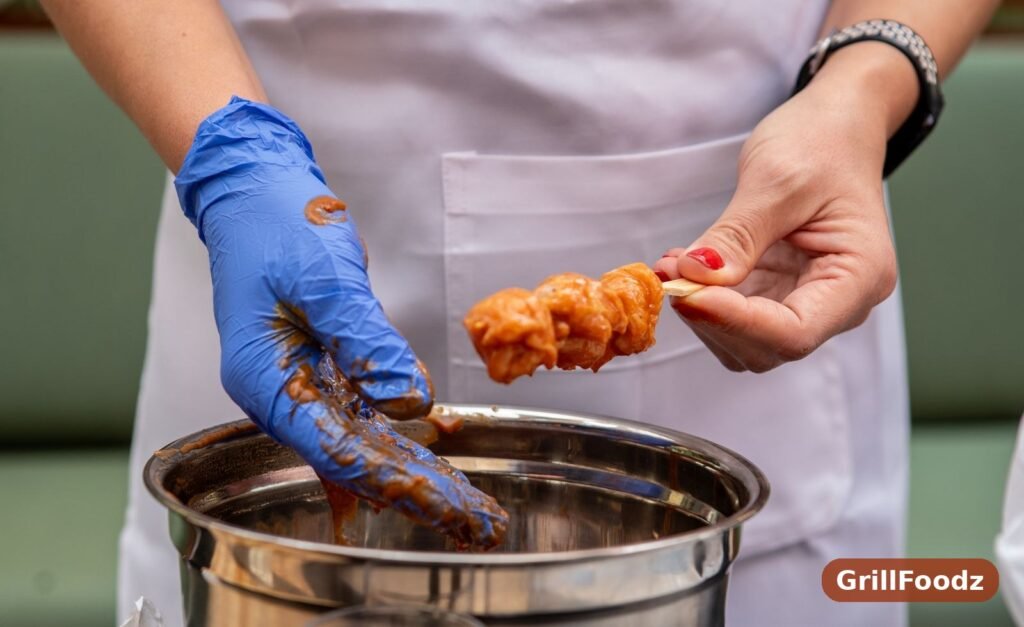
Let the chicken sit in the marinade for at least twenty minutes at room temperature, or up to four hours in the fridge if you have the time. The longer it sits, the deeper the flavour goes, but honestly, even twenty minutes makes a real difference. While the chicken marinates, cut the pineapple, pepper, and onion into pieces roughly the same size as the chicken, so everything cooks at a similar pace. If the pineapple chunks are much bigger than the chicken, they will still be firm when the chicken is done; if they are much smaller, they will fall apart on the grill. Roughly matching sizes is the trick that keeps everything cooking evenly.
Now make the glaze. Put the reserved marinade in the small saucepan over medium heat and bring it to a gentle simmer. Stir in the cornstarch mixture and keep stirring for about a minute, until the sauce thickens enough to coat the back of a spoon. It should look glossy and a little syrupy. Take it off the heat and set it aside. This is the glaze you will brush onto the skewers during the last few minutes of grilling, and it is what gives them that beautiful shiny finish. If it thickens too much while it sits, just warm it gently and stir in a teaspoon of water.
Thread the skewers next. Take a piece of chicken, then a chunk of pineapple, then a piece of pepper, then a piece of onion, and repeat until the skewer is full, leaving a little space at each end for handling. Do not pack everything too tightly together — a little gap between pieces lets the heat circulate and helps everything cook evenly. Alternate the colours as you go, because a skewer that looks good is half the pleasure of eating it. If you are using wooden skewers, remember they need to have soaked in water for at least thirty minutes, or they will burn on the grill before the chicken is done.
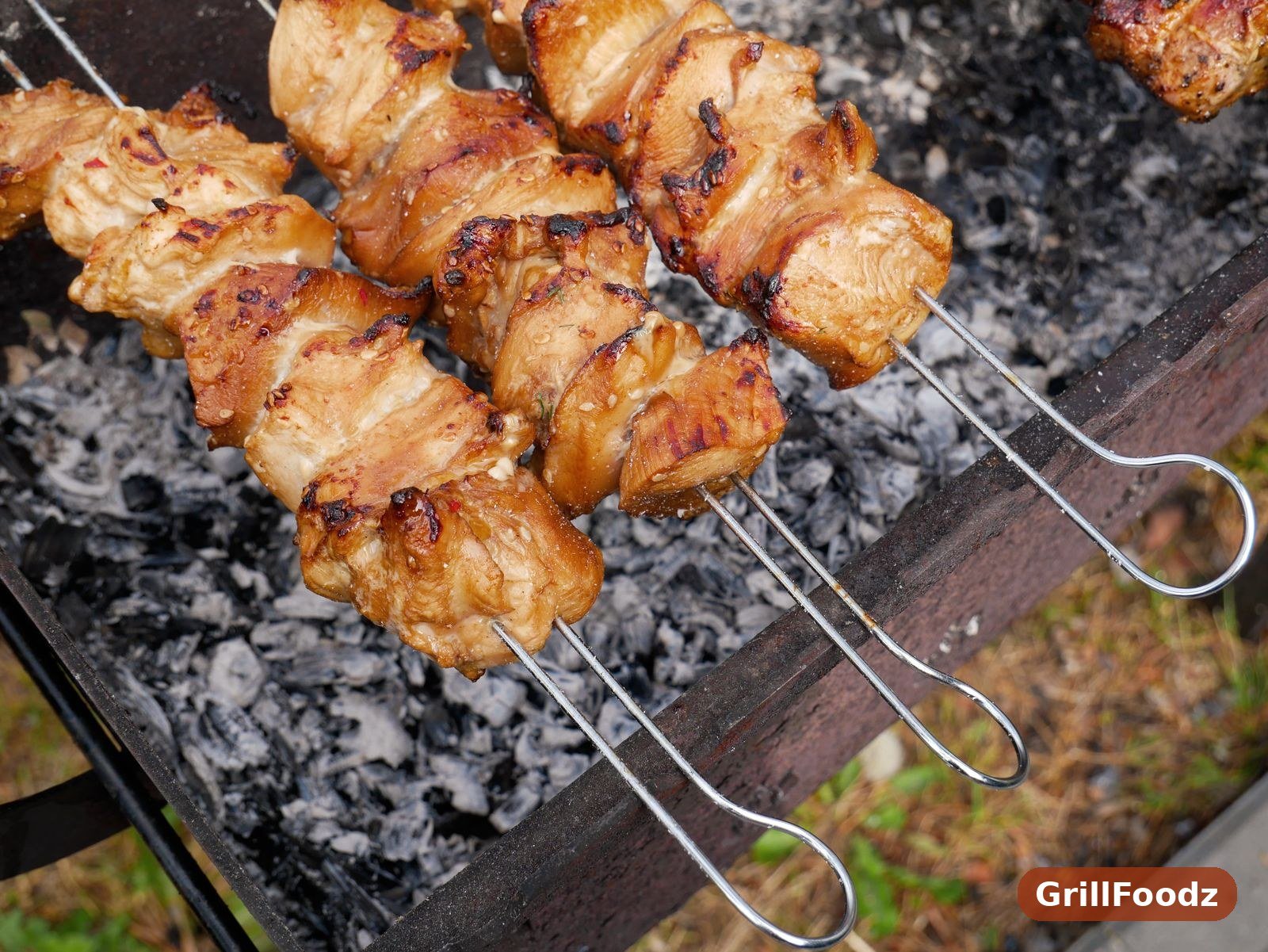
Heat the grill to medium-high, around 200 to 220°C (400 to 425°F). Clean the grates well with a grill brush, then oil them lightly using a folded paper towel dipped in vegetable oil and held with tongs. This stops the chicken from sticking, which is the most common frustration with skewers. Lay the skewers across the grates and grill for about four to five minutes on the first side, without moving them. You want proper grill marks and a little char at the edges. Turn them over and grill for another four to five minutes on the other side. The chicken should be cooked through and read 74°C (165°F) on a meat thermometer in the thickest piece. If you are unsure about safe temperatures for chicken, this guide to grilled chicken breast without drying it out has useful tips on keeping grilled chicken juicy.
During the last two minutes of cooking, brush the skewers generously with the warm teriyaki glaze on all sides. The glaze will bubble and caramelise quickly, so do not brush it on too early or the sugars will burn before the chicken is cooked. Once the skewers are glazed and glossy, take them off the grill and let them rest for three to five minutes. Resting lets the juices settle back into the chicken instead of running out onto the plate. Scatter over the sliced spring onions and toasted sesame seeds, and serve straight away while the glaze is still sticky and warm.
Tips for Perfect Chicken and Pineapple Skewers
The single most important tip is to use chicken thighs rather than breast if you can. Thighs have more fat, which keeps them juicy on a hot grill, and they are far more forgiving if you leave them on a minute too long. Chicken breast works, but it dries out faster and needs closer watching. If you do use breast, cut the pieces a little bigger and pull them off the grill the moment they hit 74°C (165°F). A meat thermometer is the best friend of anyone who grills chicken regularly, because it takes all the guesswork out of doneness.
Soak your wooden skewers properly. I know it sounds like a small thing, but dry wooden skewers catch fire on a hot grill, and there is nothing more annoying than a skewer burning through halfway across the grill with raw chicken on it. Thirty minutes in water is the minimum, and an hour is even better. Metal skewers avoid the problem entirely and they conduct heat into the middle of the chicken, which helps it cook a little faster, but they get very hot, so keep a towel handy when you pick them up.
Do not crowd the grill. If you pack the skewers shoulder to shoulder, the temperature drops, the chicken steams instead of searing, and you lose those lovely grill marks. Cook in batches if you need to, and keep the finished skewers warm under a loose tent of foil while the rest cook. It is far better to grill in two batches and get proper char than to squeeze everything on at once and end up with pale, steamed chicken. The same rule applies to the skewers themselves: leave a little gap between pieces so the heat can get all the way around.
Keep the glaze for the end. This is the mistake I see most often with teriyaki skewers. The glaze is full of sugar and honey, and sugar burns fast on a hot grill. If you brush it on at the start, it will go black and bitter long before the chicken is cooked. Wait until the last two minutes, brush it on, let it bubble and thicken for a minute, and then take the skewers off. You get all the sticky sweetness with none of the burnt bitterness. For more ideas on sauces that work on the grill, this homemade barbecue sauce without ketchup is another great option to keep in your back pocket. For a classic take on roast chicken technique, the BBC Good Food roast chicken guide is a useful reference.
Finally, cut your pieces evenly. It sounds obvious, but uneven pieces are the reason one bit of chicken is perfect and the next is still pink in the middle. Aim for pieces about the same size as the pineapple chunks, roughly four centimetres across, and take an extra minute to trim off any thin, ragged edges that would burn. Even pieces cook evenly, look better on the skewer, and make the whole thing feel like it was made by someone who knows what they are doing.
Variations to Try
Once you have the basic recipe down, there are plenty of ways to make it your own. For a spicy version, add a tablespoon of sriracha or a teaspoon of chilli flakes to the marinade. The heat works beautifully against the sweetness of the pineapple and the honey, and a little chilli oil brushed on at the end gives the skewers a lovely warmth without overwhelming them. If you like things really hot, add a finely chopped fresh chilli to the marinade and leave the seeds in.
For a Hawaiian-style twist, swap the red pepper for green pepper and add a few chunks of red onion and sweetcorn to the skewers. Serve them with coconut rice and a simple salad, and you have a dinner that tastes like a holiday. You can also add prawns to the skewers — just thread them on separately or add them for the last three minutes of cooking, since they cook much faster than chicken and go rubbery if they stay on too long.
If you want a lighter version, skip the honey in the marinade and use a little extra pineapple juice instead. The pineapple brings its own sweetness, and the glaze will still thicken nicely with the cornstarch. You can also swap the chicken thighs for turkey breast or even firm tofu, cut into the same size pieces and marinated the same way. Tofu soaks up the teriyaki flavour brilliantly, and it chars nicely on the grill. For a vegetable-heavy version, add courgette, mushrooms, and cherry tomatoes to the skewers — they grill quickly and soak up the glaze. These grilled vegetables without olive oil are a good side dish if you want to keep the meal light and fresh.
For a smoky variation, add a teaspoon of smoked paprika to the marinade and grill the skewers over charcoal instead of gas. The smoke adds a whole extra layer of flavour that works wonderfully with the sweet glaze. You can also finish the skewers with a squeeze of fresh lime instead of the spring onions, which brightens everything up and cuts through the richness of the glaze. However you change it, the bones of the recipe — juicy chicken, sweet pineapple, sticky teriyaki — stay the same, and they are hard to get wrong.
Serving Ideas
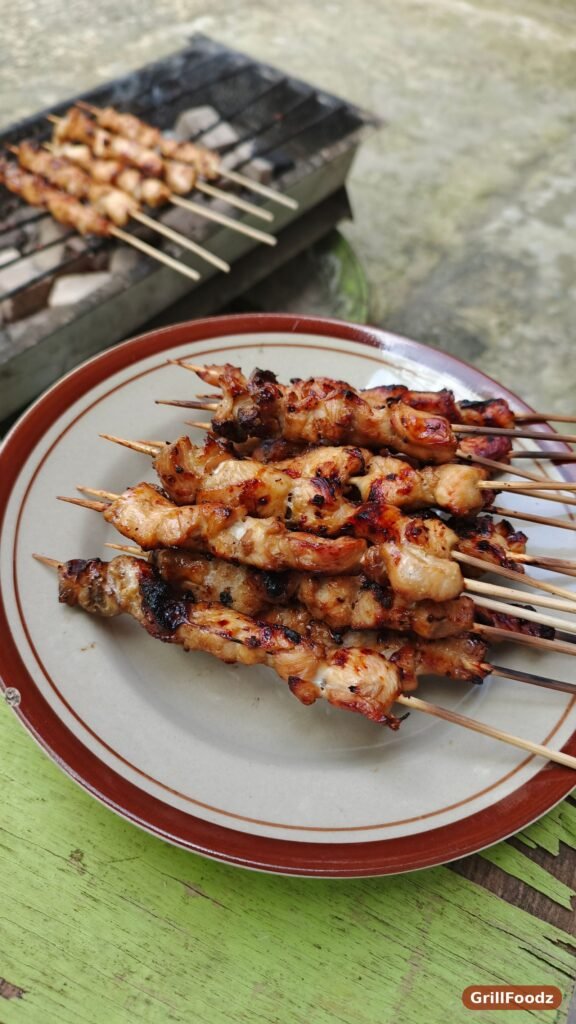
The classic way to serve these skewers is over a bed of steamed jasmine rice, with the extra teriyaki glaze spooned over the top. The rice soaks up the sticky sauce and the juices from the chicken, and it turns a fun barbecue snack into a proper dinner. Add a simple cucumber salad or some steamed broccoli on the side, and you have a complete meal that takes less than forty minutes from start to finish. A sprinkle of sesame seeds and spring onions on top makes it look like something from a restaurant. If you want another take on grilling chicken, this Delish grilled chicken recipe is a handy reference.
For a summer barbecue spread, serve the skewers straight off the grill on a big platter, with flatbreads, a crunchy slaw, and a bowl of the extra glaze for dipping. People can help themselves, pull the chicken and pineapple off the skewers, and build their own wraps. It is relaxed, it is fun, and it means the cook is not stuck plating up individual portions while everyone else is eating. Add some grilled corn on the cob and a cold potato salad, and you have a garden party menu that practically cooks itself.
If you want something lighter, serve the skewers over a big chopped salad with lettuce, cucumber, shredded carrot, and a lime dressing. The warm chicken wilts the greens just slightly, and the sweet glaze acts like a dressing all on its own. Or tuck the chicken and pineapple into warm tortillas with a little shredded cabbage and a drizzle of the glaze for quick teriyaki tacos. Kids love this version, because they get to build their own, and it is a great way to use up leftover skewers the next day.
For a more filling dinner, pair the skewers with coconut rice, grilled asparagus, or roasted sweet potatoes. The sweetness of the sweet potatoes works particularly well with the teriyaki, and the whole plate feels generous without being heavy. And do not forget a cold drink — something citrusy, like lemonade or iced green tea, is perfect with the sweet and smoky flavours. However you serve them, put the extra glaze on the table. People always want more of it.
Storage and Reheating
Leftover skewers keep well, which is one of the reasons I often make a double batch on purpose. Let the chicken and pineapple cool completely, then slide everything off the skewers into an airtight container and store it in the fridge for up to three days. Keep any leftover glaze in a separate small container. The chicken is lovely cold, sliced into salads or wraps, and I often pack it for lunch the next day exactly like that.
To reheat, the oven is your best option. Spread the chicken and pineapple in a single layer in a baking dish, spoon over a little of the leftover glaze or a splash of water, cover loosely with foil, and warm in a 180°C (350°F) oven for ten to twelve minutes until heated through. Take the foil off for the last couple of minutes if you want the edges to crisp up again. The microwave works in a pinch — about ninety seconds on medium power, covered with a damp paper towel — but the pineapple can go soft, so the oven is worth the extra few minutes when you have them.
For longer storage, the chicken freezes well, though the pineapple does not freeze quite as nicely. If you plan to freeze leftovers, I would freeze just the chicken pieces, in a freezer bag with the air pressed out, for up to two months. Thaw overnight in the fridge before reheating, and grill or pan-fry the chicken briefly to bring back a little char. The pineapple is best eaten fresh, so freeze the chicken on its own and use fresh pineapple when you serve it again. Never refreeze chicken once it has been thawed.
Frequently Asked Questions
Can I use chicken breast instead of chicken thighs?
Yes, you can, and it works well as long as you watch the cooking time closely. Chicken breast dries out faster than thighs, so cut the pieces a little larger, about five centimetres across, and pull them off the grill the moment they reach 74°C (165°F) in the thickest piece. Do not leave them on the grill while you chat — breast goes from perfect to dry in about a minute. Marinating the breast for the full four hours also helps, because the marinade keeps the meat moist. If you want the juiciest result possible, though, thighs are still my first choice.
Do I have to use fresh pineapple, or can I use tinned?
Fresh pineapple is better, because it holds its shape on the grill and caramelises beautifully, but tinned pineapple works fine in a pinch. If you use tinned, buy the chunks in juice rather than syrup, drain them well, and pat them dry with paper towels before threading them onto the skewers. Wet pineapple will steam instead of charring, and it can make the skewers slide around. Tinned pineapple is also softer, so handle it gently and do not squeeze it too tightly onto the skewer or it will break apart.
How long should I marinate the chicken?
Twenty minutes is the minimum, and it already makes a noticeable difference. Two to four hours in the fridge is ideal, because the soy sauce, ginger, and garlic have time to work their way into the meat. Do not marinate for longer than about eight hours, though, because the salt in the soy sauce will start to change the texture of the chicken and make it a little soft and mushy. If you want to prep the night before, mix the marinade and keep it separate, then toss the chicken in it in the morning.
Can I make these skewers in the oven instead of on the grill?
Yes, absolutely. Thread the skewers as usual, lay them on a wire rack set over a baking tray, and cook them under a hot grill (broiler) or in a 220°C (425°F) oven for about twelve to fourteen minutes, turning them once halfway through. Brush the glaze on during the last two minutes, just as you would on the barbecue. You will not get quite the same smoky char, but they will still be juicy, sticky, and delicious. A grill pan on the hob works well too, and it gives you proper grill marks.
What should I serve with teriyaki chicken skewers?
Steamed jasmine rice is the classic pairing, and it soaks up the glaze beautifully. Coconut rice, noodles, or a simple fried rice all work well too. For something lighter, a crunchy Asian slaw, a cucumber salad, or grilled vegetables are lovely. If you are serving them at a barbecue, flatbreads, corn on the cob, and a cold potato salad turn them into a full spread. A cold lemonade or iced tea is the perfect drink alongside, because the citrus cuts through the sweetness of the glaze.
Can I prepare the skewers ahead of time?
Yes, and they are a great make-ahead barbecue food. You can marinate the chicken and thread the skewers up to eight hours in advance, then keep them covered in the fridge until you are ready to grill. Just take them out of the fridge about twenty minutes before cooking so they are not ice-cold when they hit the grill, because cold chicken cooks unevenly. Make the glaze ahead too and keep it in a small container in the fridge, then warm it gently before brushing it on.